
Success
Find Success at Columbia
The success section of the Columbia College Calgary website has been created to post a wide range of documents designed to assist you in your desire to be successful, regardless of who you are, the position you hold or are aspiring to hold, or your career goals.
While each of us desires to find and experience success at work, we tend to experience a full array of challenges along the way. Many of these challenges will be new to us, some will be complex, however most will involve interactions with a wide variety of unique individuals. We need to acquire new knowledge and develop new skills on an ongoing basis that when applied appropriately will contribute to our success working effectively with others.
To achieve real success as an individual, as an organization (for-profit or non-profit), or even as a government first requires a clear understanding of who you are working with and your ability to identify their needs. They may be referred to as clients, patients, students, the electorate, or fellow team members. These individuals may also be referred to as internal or external customers. Next, you need to clearly understand their changing needs. Finally, you need to do all that you genuinely can to help them succeed. As a result, when they experience success, so will you. However when they fail, you do too. It is just that simple. In essence, the more you help others to succeed, the more you succeed.
Your path to success will be filled with a vast array of experiences that will range from elation to exhaustion. Learn from all of your experiences. This will help make you stronger.
These documents will hopefully broaden your perceptions, deepen your understanding, strengthen your knowledge/skills, and therefore increase your opportunity to experience success. Work hard but also have lots of fun as you travel along your road to success!
Managing Self/Others And Leadership We All Share
Job Search Tips
Visit the President’s page for his insights on the topics of Government and Education
Click here
Professional Behaviour and Winning Attitudes
- Success (Personal, Organizational, Societal)
- Your Work and Life Purpose
- The Building Blocks that Lead to Success in the Workplace
- Does Your Education and Professional Behaviour Affect Your Employment Success
- Professional Behaviours – ADM-P276
- Professional Code of Conduct (Plain Language Version)
- Does Positive Behaviour Contribute to Individual Success?
- Ground Rules for Interacting with Others
- Seven Principles that Lead to Personal and Professional Success
- What Employers are Looking For
- Job Career or Calling
- We are One
- My Behavioural Profile
- My Behaviourial Profile Scoring
- The Life Satisfaction Questionnaire
- The Life Satisfaction Questionnaire Scoring
- The Positive Expectations Questionnaire
- The Positive Expectations Questionnaire Survey
- The Luck Tendency Questionnaire
- Decision Making Step By Step
- Introduction to Total Quality
- 10 Important Questions that will Help you make a More Informed Decision and Increase your Future Success
- Am I a Professional?
- Being a Professional
Quick Links
Connect with an Advisor
403-235-9300
The success section of the Columbia College Calgary website has been created to post a wide range of documents designed to assist you in your desire to be successful, regardless of who you are, the position you hold or are aspiring to hold, or your career goals.
While each of us desires to find and experience success at work, we tend to experience a full array of challenges along the way. Many of these challenges will be new to us, some will be complex, however most will involve interactions with a wide variety of unique individuals.
We need to acquire new knowledge and develop new skills on an ongoing basis that when applied appropriately will contribute to our success working effectively with others.
Resources for Success
Intro
To achieve real success as an individual, as an organization (for-profit or non-profit), or even as a government first requires a clear understanding of who you are working with and your ability to identify their needs. They may be referred to as clients, patients, students, the electorate, or fellow team members. These individuals may also be referred to as internal or external customers. Next, you need to clearly understand their changing needs. Finally, you need to do all that you genuinely can to help them succeed. As a result, when they experience success, so will you. However when they fail, you do too. It is just that simple. In essence, the more you help others to succeed, the more you succeed.
Your path to success will be filled with a vast array of experiences that will range from elation to exhaustion. Learn from all of your experiences. This will help make you stronger.
These documents will hopefully broaden your perceptions, deepen your understanding, strengthen your knowledge/skills, and therefore increase your opportunity to experience success. Work hard but also have lots of fun as you travel along your road to success!
Professional Behaviour and Winning Attitudes
- Success (Personal, Organizational, Societal)
- Your Work and Life Purpose
- The Building Blocks that Lead to Success in the Workplace
- Does Your Education and Professional Behaviour Affect Your Employment Success
- Professional Behaviours – ADM-P276
- Professional Code of Conduct (Plain Language Version)
- Does Positive Behaviour Contribute to Individual Success?
- Ground Rules for Interacting with Others
- Seven Principles that Lead to Personal and Professional Success
- What Employers are Looking For
- Job Career or Calling
- We are One
- My Behavioural Profile
- My Behaviourial Profile Scoring
- The Life Satisfaction Questionnaire
- The Life Satisfaction Questionnaire Scoring
- The Positive Expectations Questionnaire
- The Positive Expectations Questionnaire Survey
- The Luck Tendency Questionnaire
- Decision Making Step By Step
- Introduction to Total Quality
- 10 Important Questions that will Help you make a More Informed Decision and Increase your Future Success
- Am I a Professional?
- Being a Professional
Managing Self/Others And Leadership We All Share
Success Rate
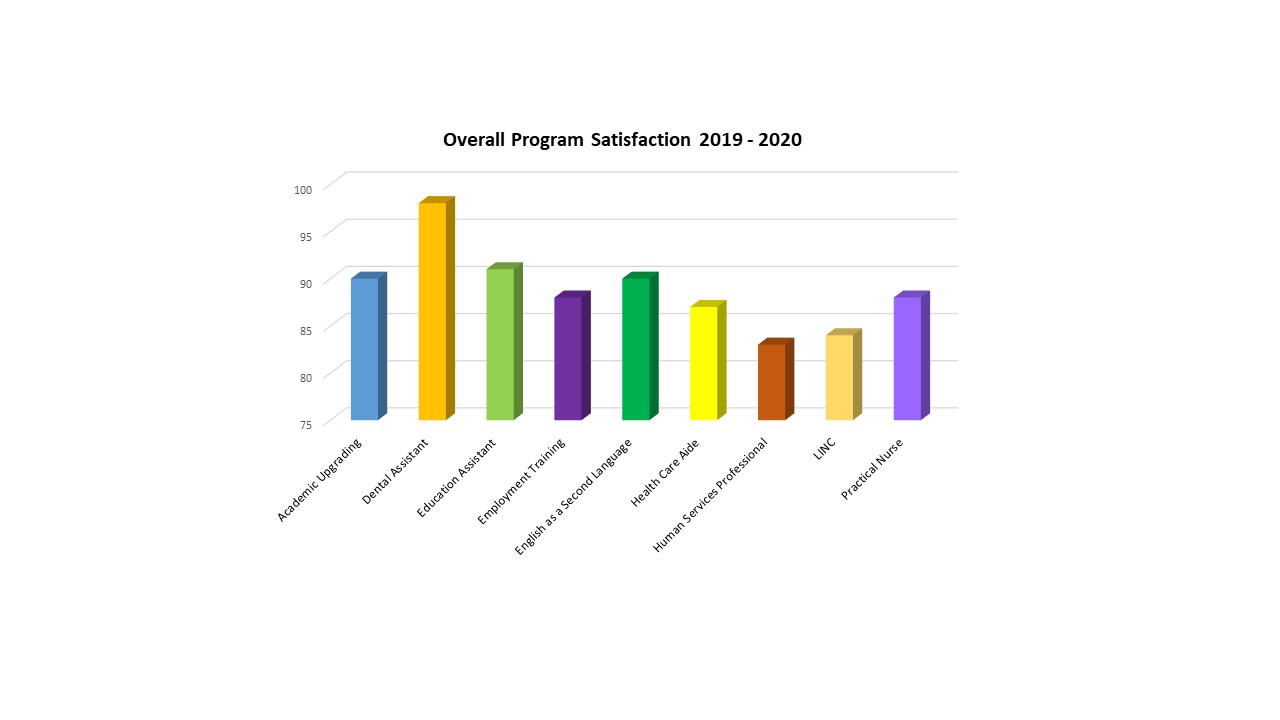
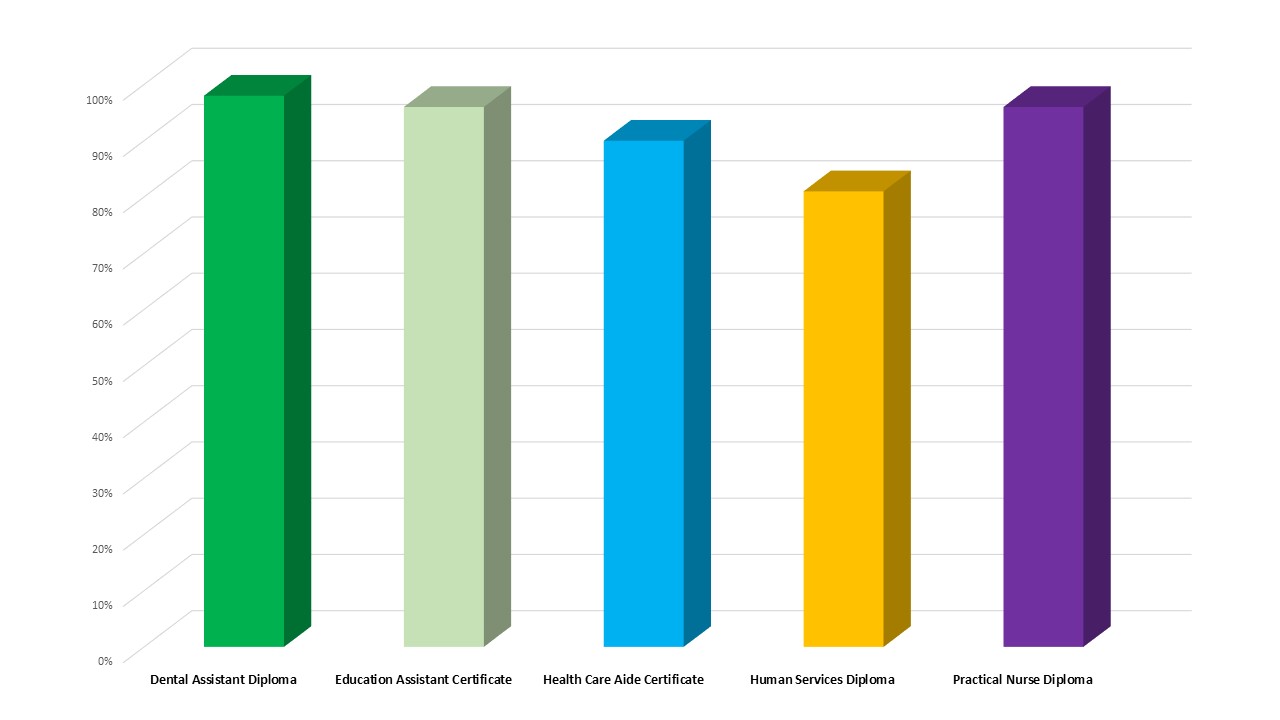
Columbia College strives to provide an environment of success for all of its students. Three main ways we gauge our success is by looking at Student Satisfaction, the Graduation Rate of our Students, and the Employment Rate of our students.
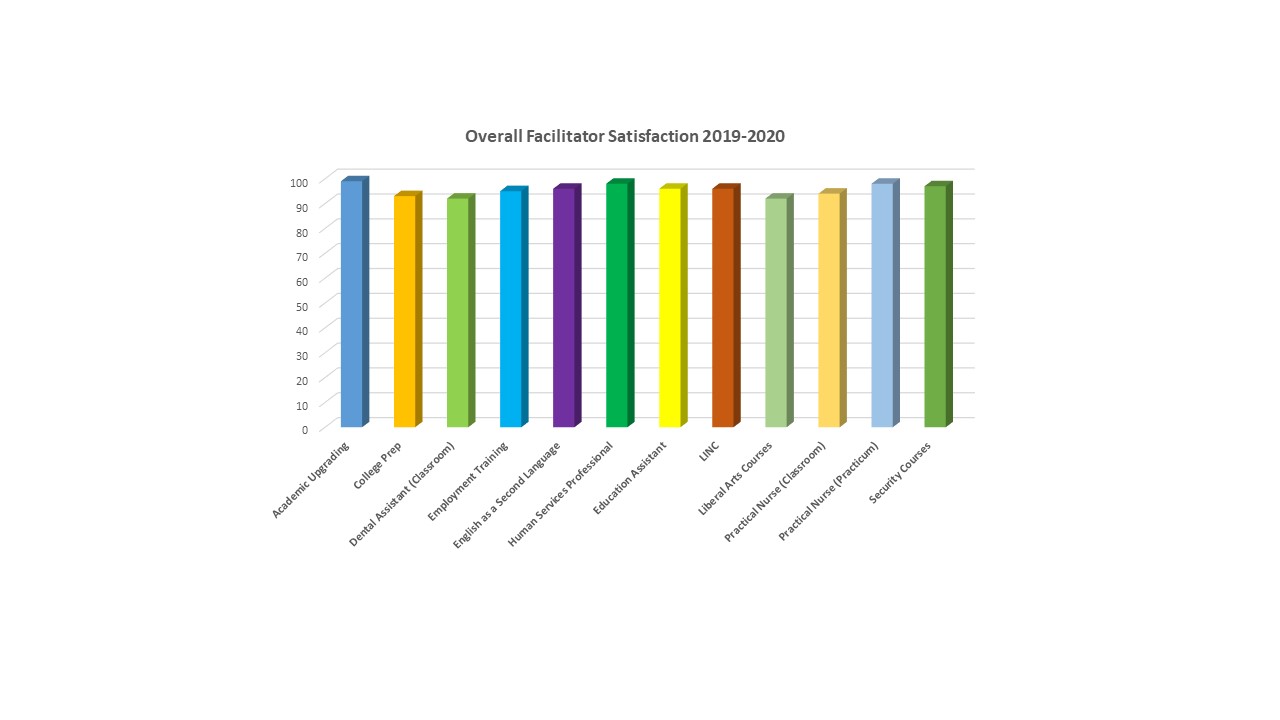
Student Satisfaction
Completion Rates of Certificate and Diploma Students at Columbia College Calgary: 2019-2020
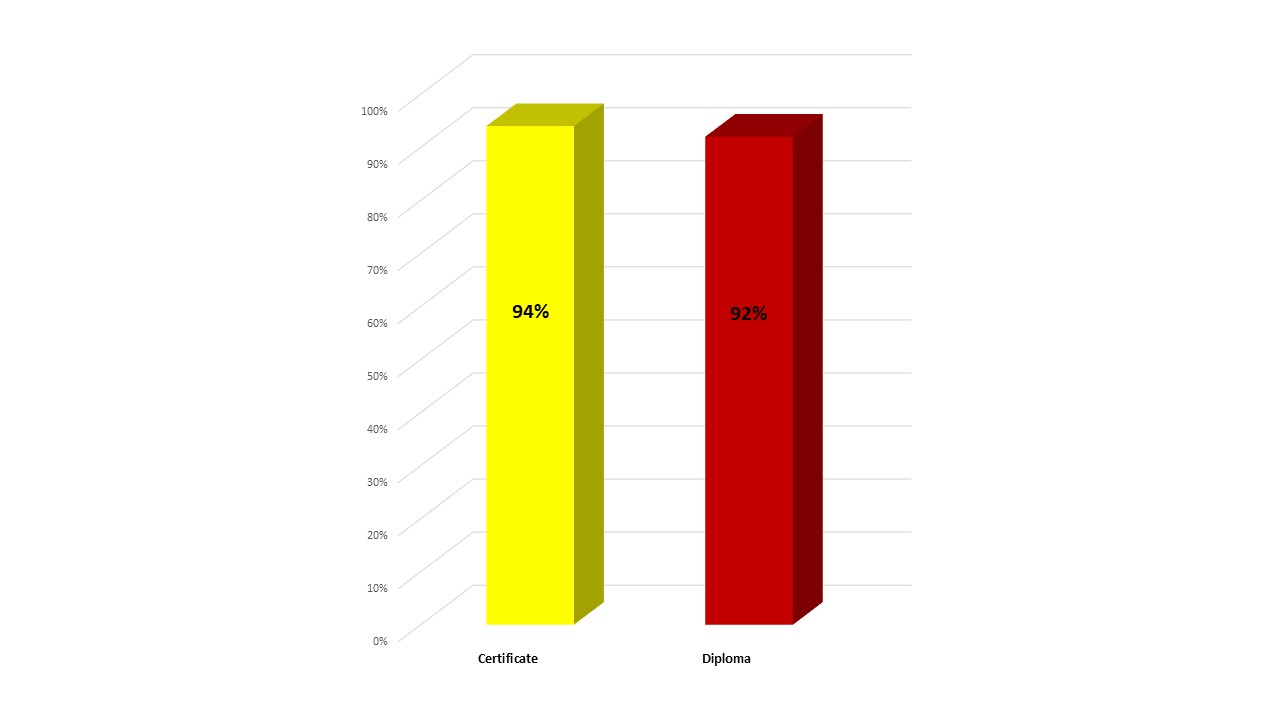
Completion Rates of Students
Employment of Graduates
Graduate Success in Obtaining Employment in their Field of Training – 2019-2020
Transfer Students
Columbia may grant applicants transfer credit for courses completed at other recognized post-secondary institutions, provided their courses are assessed by Columbia as comparable to courses in their chosen program.
Applicants required to withdraw from other post-secondary institutions may not be eligible for admission to a professional program at Columbia College until 12 months after the date they were required to withdraw.
In order to help determine appropriate transfer credit, students will be requested to submit detailed course outlines for coursework completed at other post-secondary institutions.
Admission Status
The most suitable applicants will be notified of their admission status as soon as possible. The normal processing time for admission is one to three weeks after all required documents/information have been received by the College and all steps in the selection process have been completed.
Columbia College reserves the right to refuse admission to any individual.
Once a student has been admitted, if required, it may take an additional eight weeks from the time a funding application is sent in to secure grant funding from the government and approximately four weeks for funding from Student Aid Alberta. Students with documented permanent disabilities applying for disability-related funding will need approximately three to six months to complete the process, provided that the student has acceptable documentation to support the disability. An Accessibility Services Advisor will guide the student through the funding application process. To learn more about Columbia’s Accessibility Services, please click here.
Applicants will be advised of their admission status as follows:
- Provisional Acceptance
Applicants who are provisionally accepted are individuals who must still meet certain admission requirements. This status does not guarantee a seat in a program or course until all admission conditions are met, the Contract of Tuition is signed and required registration fees paid (Professional Programs). - Accepted
The most suitable applicants who meet all academic and other program requirements may be deemed accepted. Seats will be reserved for these individuals once their contracts are signed, required fees paid, and tuition funding approved. - Waiting List
When the number of accepted applicants has reached the maximum number that can be accommodated, the remaining most suitable applicants, who have met all acceptance requirements, will be placed on a waiting list. When space becomes available they will then be considered for acceptance status. Waiting list applicants who are not accepted for the current session are not required to re-submit new application forms to be considered for acceptance in the subsequent intake unless they ask to be withdrawn from future enrollment. - Declined Applicants
Applicants who are not admitted. - Cancelled Applicants
Applicants who advise that they do not wish to enroll in the selected program or course.
Information Required for Transfer Credits
Course outlines must include the following information for each course for which transfer credit is requested:
- detailed list of topics covered;
- list of textbooks used;
- grading practices used for the course;
- number of weeks of attendance (excluding examination period);
- and number of lecture, tutorial and laboratory hours.
These outlines can normally be obtained from the department offering the course.
Students requesting transfer credit for courses completed at other institutions must submit a Transfer Credit Request Form to the Registrar’s office along with the specific course outline information for each course. The form is available from the Administration Office, Bldg. 802. The required fee must be paid before the Transfer of Credit process begins.
Assessment of Transfer Credits
Transfer credit must be assessed and approved during the admission process and prior to the start of the program.
Applicants must meet regular program prerequisites. The College will evaluate the transcript and course outlines and determine credits to be granted. Please refer to the Tuition and Fees page. No adjustments will be made until all assessments of transfer documents have been completed. Applicants will be responsible for full tuition cost unless transfer credits have been approved by the College before beginning the program. Transfer of credits will not be considered once the student has begun a program. Please allow 2-3 weeks to complete this process.
A student may have some or all of his/her previous courses transferred to Columbia College. However, Columbia College requires the student to complete at least half of his/her courses in the program of his/her choice at Columbia College in order to receive a certificate or diploma.
Students should be aware that transfers of credit may affect whether you are considered as a full-time student for government grant and student loan purposes. A full-time student would be enrolled for 60 per cent of the courses in a semester. A student with a disability would be considered full-time if enrolled for 40 per cent of the semester.
For further information, please contact the Registrar’s Office at registrar@columbia.ca or the Main office in building 802.

Speak to an Advisor Today
Are you ready to advance your skills, exceed your ambitions, and discover success? Join us, and let’s craft your success story together.